The white space + the pathway
The project plan
- Months 0–4 (Illustrative)
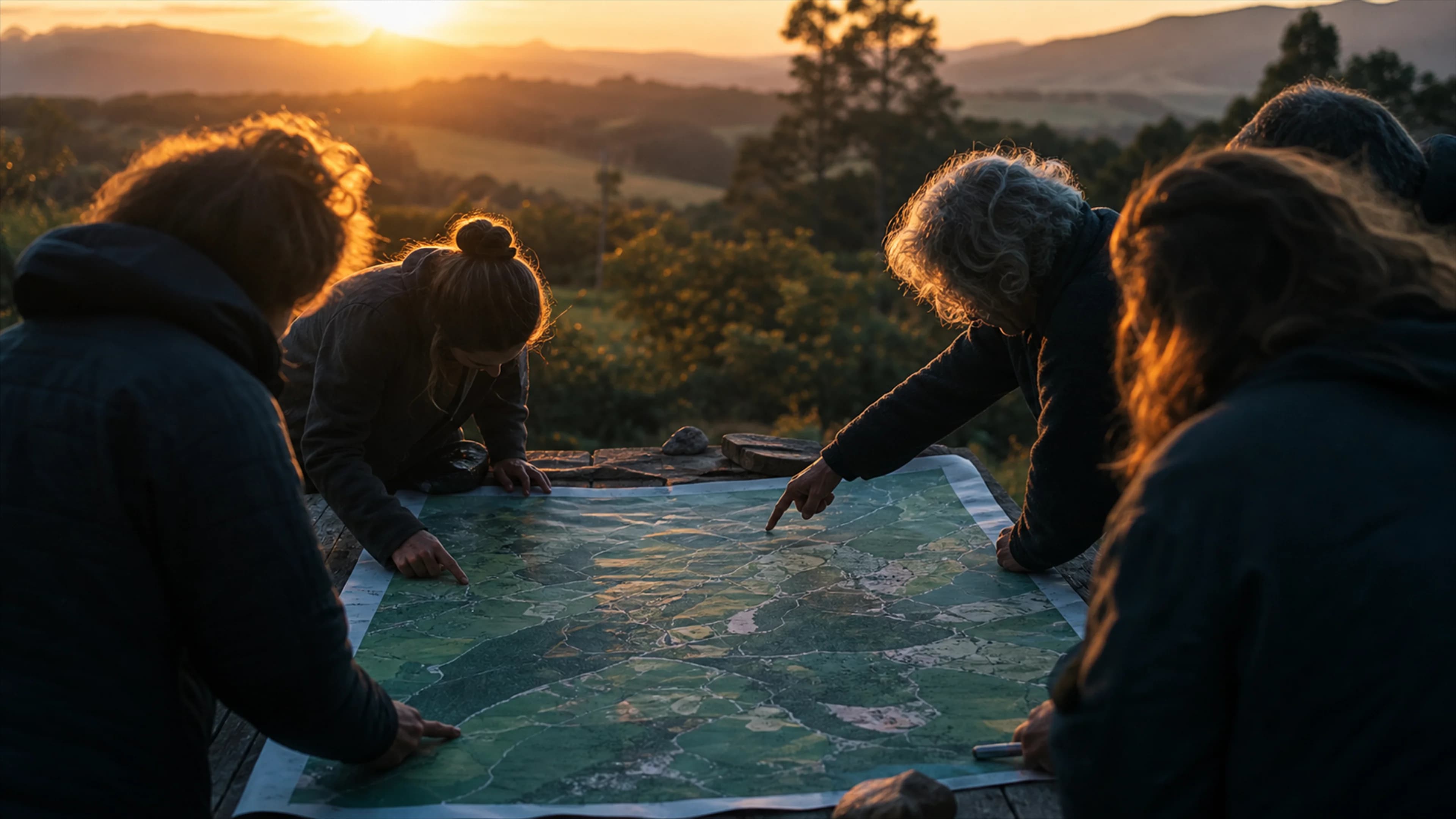
Story of Place discovery
The place's watershed, cultural, and ecological memory is convened as the design brief — before any facility is drawn. The Story-of-Place process runs pre-FEED, while every option is still open.
How this phase works — and what it accomplishes
GateThe community recognizes its own story in the brief and agrees it is ready to test readiness.
- Months 4–7 (Illustrative)
Readiness Gates
Three readiness questions are answered in public: is the PLACE ready (water, land, grid), is the COMMUNITY ready (trust, governance, consent — FPIC where Indigenous land or water is touched), and is the CAPITAL ready (patient enough for covenanted terms)?
How this phase works — and what it accomplishes
GateAll three readiness gates pass in public session — or the engagement pauses honestly at the one that failed.
- Months 7–13 (Illustrative)
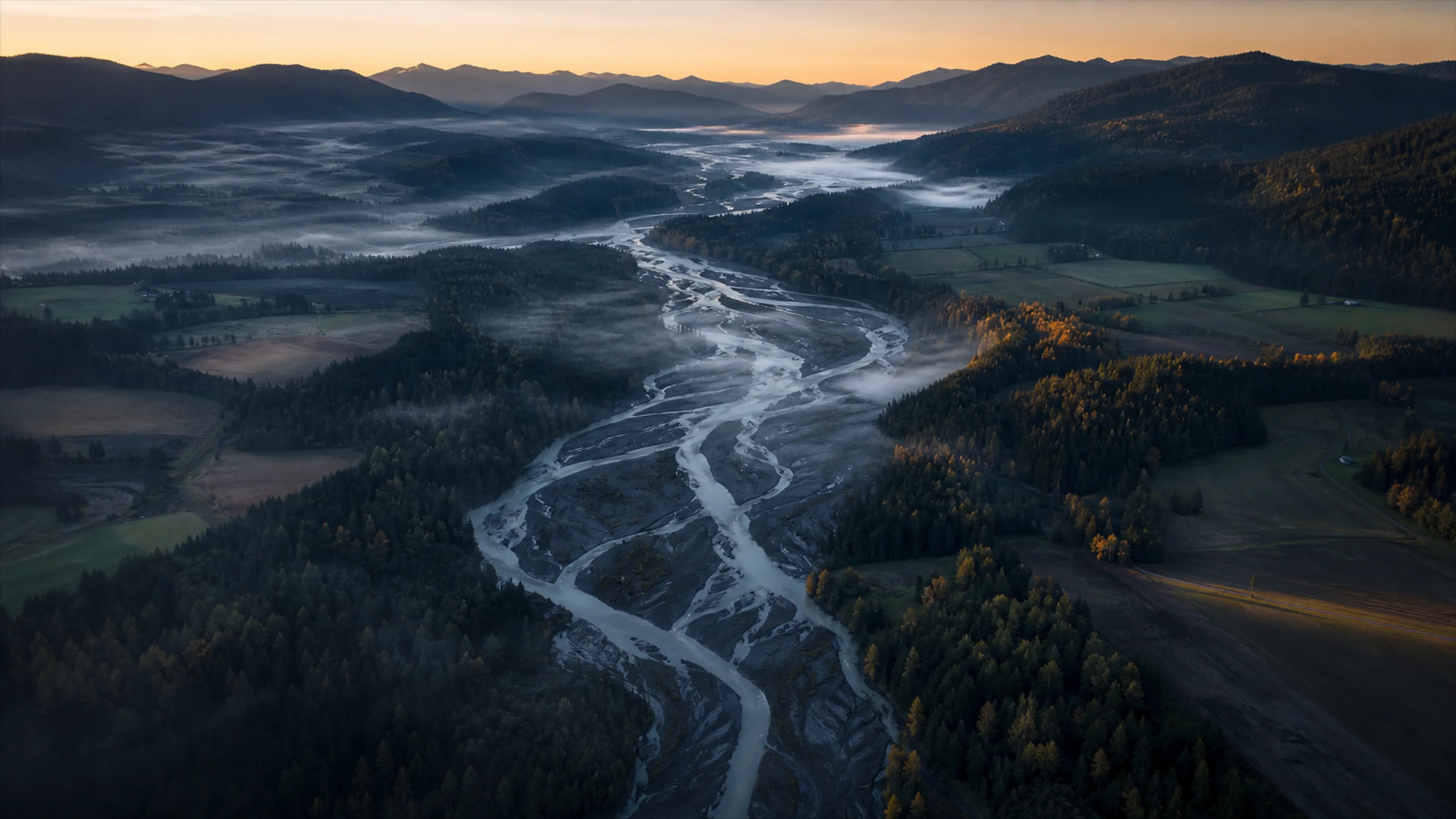
Design — the place writes the spec
The place's answers select the stewardship menu, and the portfolio is composed into the facility's FEED-stage design brief — heat, water, land, community, workforce, and civic-compute systems designed as one whole.
How this phase works — and what it accomplishes
GateFID is taken on the place-authored spec — the portfolio is in the base design, not an appendix.
- Months 13–15 (Illustrative)
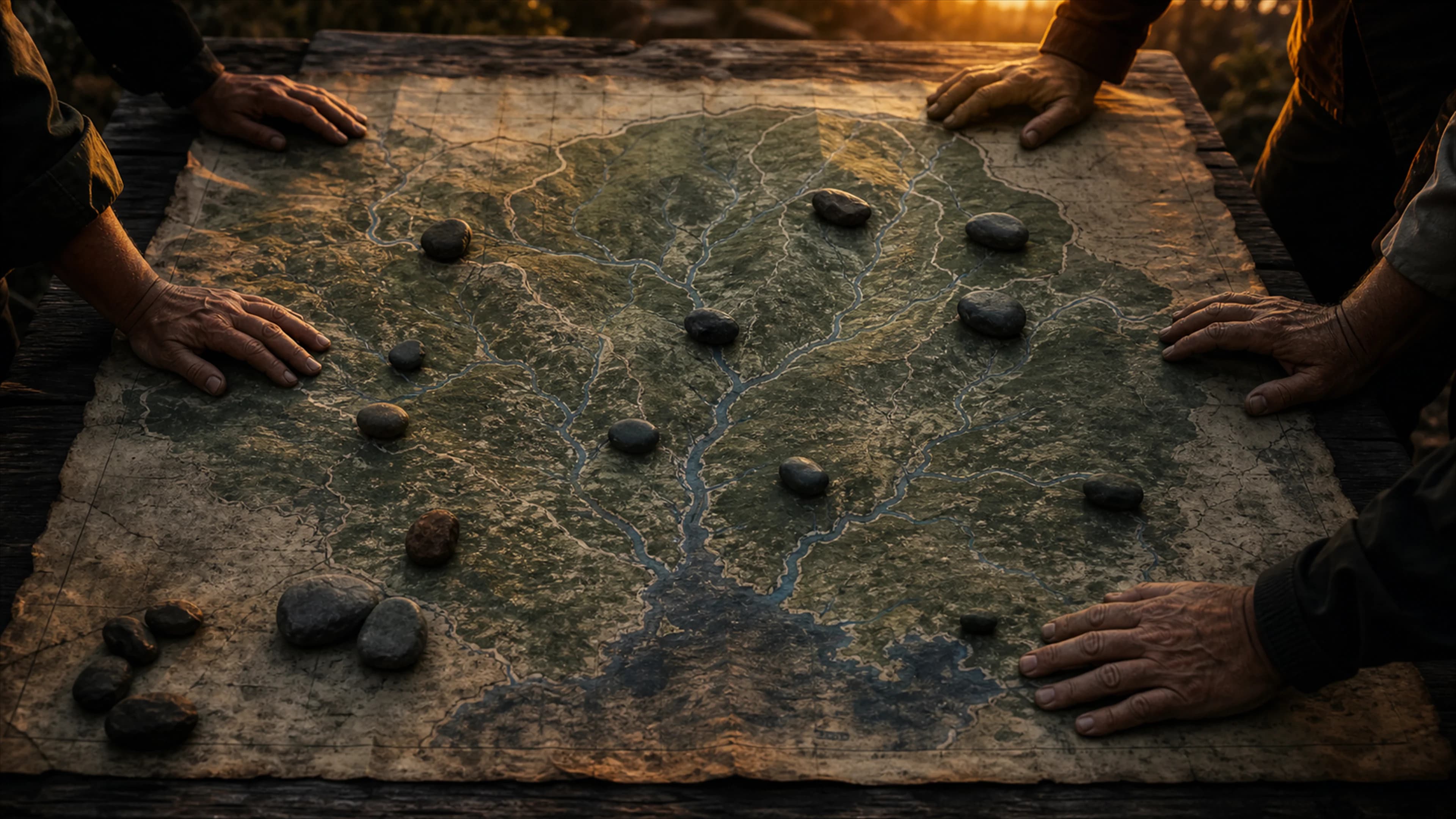
Covenant — commitments with teeth
The portfolio's commitments are bound in enforceable covenants that run with the land: a public covenant registry, clawback security (letter-of-credit class), a citizen-governed benefit fund, and a no-NDA transparency commitment.
How this phase works — and what it accomplishes
GateCovenants are executed and published in the registry before ground breaks.
- Months 15–33 (Illustrative)
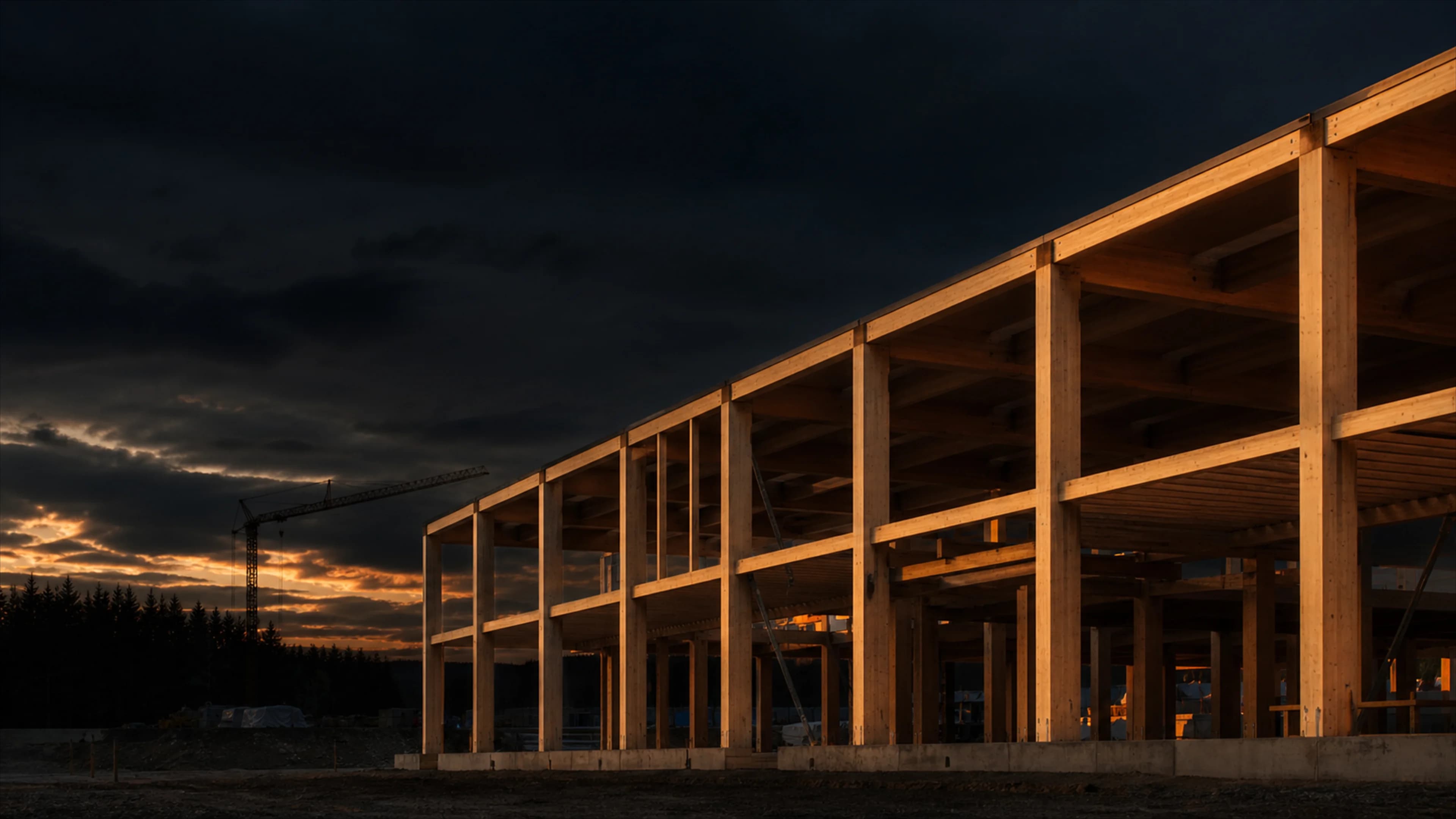
Build — construction under the covenanted portfolio
Construction proceeds under the covenants, not alongside them. Local-hire and project-labor agreements put the town's own apprentices on the site from the first pour, and heat-ready design goes into the ground with the foundations rather than waiting for a retrofit.
While the walls rise, habitat restoration around the fence line proceeds on its own schedule — the living systems work does not wait for ribbon-cutting.
- Month ~33 (Illustrative)

First operations — heat flows, dashboards go live
The heat network is commissioned as part of first operations, so warmth reaches the greenhouse and the district loop from the start rather than as a later promise. Public real-time dashboards go live the same season, and the operations career ladder takes its first local cohort.
- Operating year 1 (Illustrative)

The first annual whole-place Five Capitals report
At the close of the first operating year, the facility publishes its first annual whole-place Five Capitals report — and an independent verifier signs it. The place reads its own accounting, on the record, against the stage the covenants promised.
- Operating years 2–5 (Illustrative)
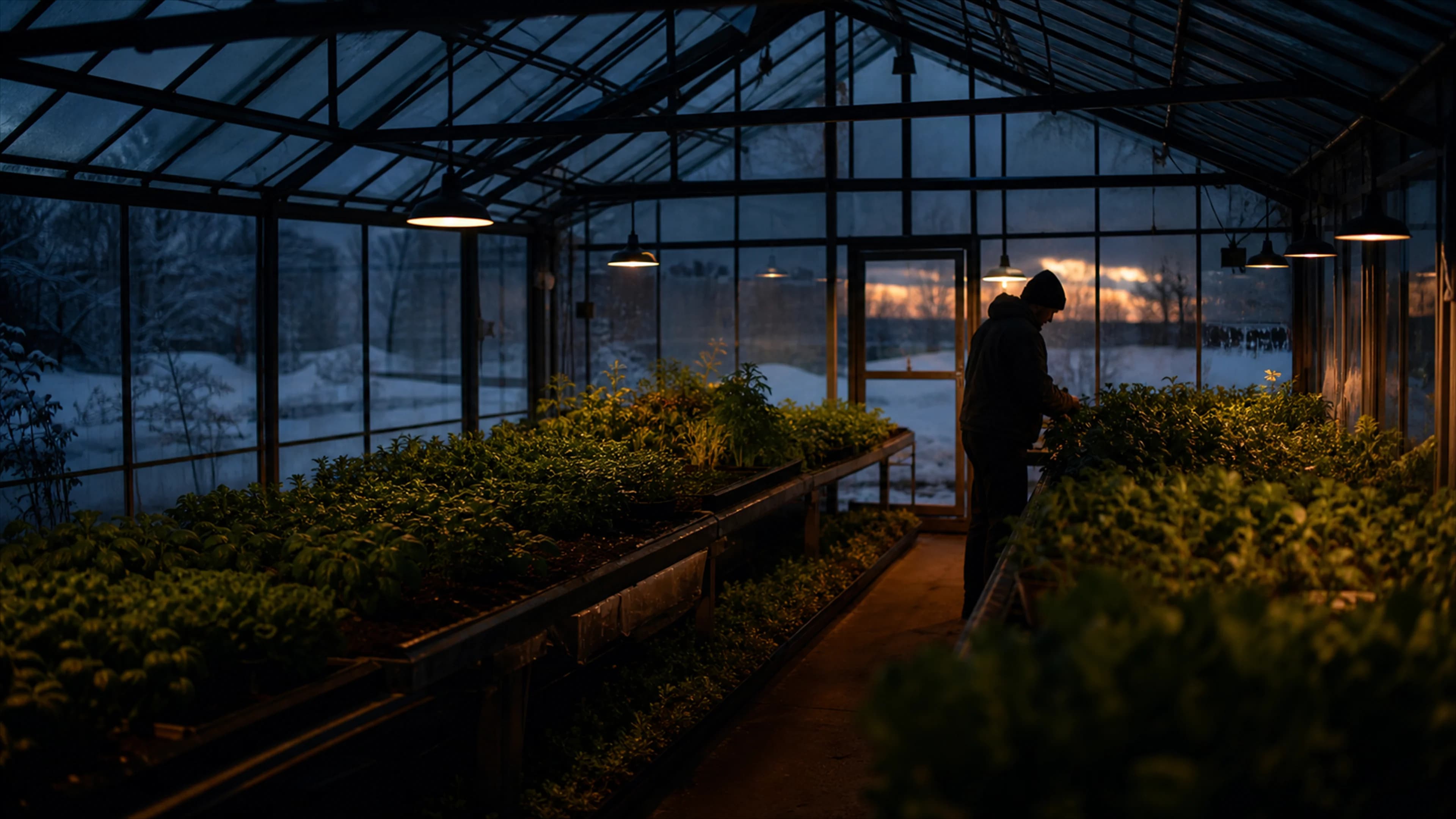
The portfolio compounds
The greenhouse-and-heat symbiosis matures into steady seasons, civic-compute redemptions become routine rather than ceremonial, and the workforce ladder fills from within the community it was built for. Each verified year makes the next one easier to hold.
- Life of facility (Illustrative)

Verify & Steward
The facility operates under annual whole-place Five Capitals accounting, public real-time dashboards, and independent outcome verification — the VLAS-recognition pathway remains conceptual and is labeled as such.
The annual cycle never closes — and the end-of-life community-asset conversion plan stands ready from day one, so if the facility ever winds down, the place keeps the assets.
How this phase works — and what it accomplishes
GateEach year's whole-place accounting is published and independently verified — the gate never closes; that is stewardship.
Who pays for the front end?
In this reference model, discovery through covenant (months 0–15) is developer-funded pre-FEED work — the same budget line conventional projects spend on siting studies and community relations, spent earlier and in public. The town’s cost is hearing time, not consultants. A failed readiness gate is not sunk cost: the Story of Place and the Stewardship Profile are portable — they travel to the next candidate site, and the place keeps its own story.
What does the schedule buy?
The place-first front end is bounded and scheduled — an indicative ~15 months to an executed covenant (Illustrative). The contested conventional path is not: the first page’s ledger counts 833 opposition groups with projects blocked or delayed and no scheduled end — no national average delay even exists to price it.Data Center Watch / working-from-potential research (July 2026)833 organized opposition groups across 49 states reported in Q1 2026; ~71% local-opposition sentiment in surveyed contests; data-center projects blocked, litigated, or stalled at interconnectCompiled advocacy/observatory figures for Q1 2026; treat as reported-not-audited totals. Permission, not construction, is the critical path, and the stewardship portfolio itself is small money at facility scale. This model spends its calendar where it is cheap — before FID — instead of losing it where it is ruinous: after.
Each stage has a gate — and the gate is the point
Extractive
The default. Value flows out of the place: secret contracts, cost-shifting onto ratepayers, water drawn from stressed basins with no return. The community carries the externalities.
Who is roughly here: The pattern behind the Chile and Uruguay water conflicts and the secret-contract cost-shifting the opposition ledger tracks.
- Default stage — no conditions met.
Mitigated
Harm is measured and reduced. PUE and WUE targets, renewable energy certificates, efficiency commitments. Better — but still accounting for damage avoided, not life added.
Who is roughly here: Self-regulation such as the Climate Neutral Data Centre Pact trajectory; most 'sustainable' hyperscale sites sit here.
- Offset-to-footprint ratio ≥ 0.25
- A water-cooling design intervention (zero-water or closed-loop) active ≥ 50%
- An embodied-carbon or hardware-reuse intervention active
Balanced
The place is held whole. Water is replenished in the same basin (with the basin-matching caveat honored), and a composed portfolio covers every capital — not just the easy ones.
Who is roughly here: Water-positive replenishment programs and multi-capital portfolios beginning to appear in leading projects.
- Offset-to-footprint ratio ≥ 0.6
- Per-capital coverage ≥ 40% for ALL five capitals
- At least one operating-tier intervention active ≥ 50% in each of 3+ categories
Contributing
The facility gives more than it takes on several strands. Waste heat warms homes; workforce ladders are real; synergies compound. The place is measurably better for its presence.
Who is roughly here: Odense, Hamina, and Stockholm district-heat deliveries; Boden industrial-symbiosis pilots.
- Offset-to-footprint ratio ≥ 1.0
- Per-capital coverage ≥ 70% for all capitals
- At least one synergy group active
- At least one community-economics intervention active ≥ 50%
- A climate-matched condition (cold/temperate: heat synergy · arid: water synergy · tropical: two water interventions active)
Regenerative AnchorAspirational
The integrated whole: heat, food, civic compute, and habitat woven together, covenanted and verified where the gains are grown. Reducing damage is not the same as increasing life — this stage is the second thing.
Who is roughly here: No operating example exists. The gate is defined so the road is real and the destination is honest.
- Offset-to-footprint ratio ≥ 1.3
- Per-capital coverage ≥ 100% for all capitals
- Story of Place process active
- Whole-place accounting or independent verification active
- A civic-compute or community-equity intervention active
- At least three synergy groups active
Regulation is catching up — but the floor is not the ceiling
What no operator occupies yet
Beyond the top of the pathway is territory no operator holds today: multi-capital outcomes recognized as on-balance-sheet assets, held under a fiduciary duty to the place, with net-positive imperatives treated as a technical bar rather than a marketing claim.
The gains, where they are grown, would be covenanted and verified — so that a promise made at siting is still true a decade later. This model points at that white space honestly: it is a destination worth naming, not a product that already exists.